



Simple. Good. Jobs. Join Team Schmid!
Your future at Gebäudetechnik Schmid. Are you looking not just for a job, but for a team you can rely on? Do you want to install technology that really inspires? Then you've come to the right place
Modern, independent energy efficiency: solar power systems for your business
Whether new build, renovation or extension: Professional planning and advice is the cornerstone of a successful building technology project
Whether new build or renovation: The right building technology plays a key role in the energy efficiency, comfort and safety of your building
As an experienced specialist in ventilation and building technology, Schmid Gebäudetechnik offers a comprehensive range of maintenance and service work
Sustainable energy that pays off. Solar power for your business
In times of volatile energy markets and growing environmental responsibility, having your own photovoltaic system is much more than just a technical upgrade – it is a strategic investment in the future of your location.
Why is now the right time for solar power?
The unused roof or open spaces at your company offer enormous potential that can directly contribute to your business success. With a customised solar power system, you can transform your premises into your own power plant and benefit from clear advantages.
Schmid Building Services – Your partner for building services
As experienced specialists in building services engineering, we support you in the planning, installation and maintenance of building services systems that are perfectly tailored to the needs of your company.
1. Economic advantages
Significant cost reduction: Self-generated solar power often costs only 7 up to 10 pence per kWh, whereas mains electricity is significantly more expensive for businesses. Every kilowatt hour you consume yourself directly increases your margin.
High returns & short payback period: Thanks to lower system prices and high self-consumption rates (especially in production and commerce, where a lot of energy is needed during the day), a system usually pays for itself after 5 to 8 years.
Protection against price increases: You secure your electricity prices for the next 25+ years. While the market fluctuates, your production costs remain stable – offering maximum planning reliability.
Additional income: Surplus electricity that you do not consume yourself can be fed into the public grid in return for a fixed payment.
2. Strategic & Operational Advantages
Independence: They reduce dependence on energy suppliers and global energy markets. In combination with a battery storage system, you can self-sufficiency further increase and cap peak loads (peak shaving).
Increase in property value: A photovoltaic system enhances the technical value of the building and makes the property more attractive to tenants or buyers.
Low effort: Modern PV systems are extremely low maintenance and durable. With a service life of over 25 years, they are one of the safest investments in operational infrastructure.
3. Sustainability & image (ESG)
Compliance with reporting obligations: For many companies (SMEs), stricter regulations will apply from 2026 onwards. ESG reporting obligations (environment, social issues, corporate governance). A solar power system is measurable proof of your sustainability strategy.
Minimising your carbon footprint: You produce emission-free electricity and make an active contribution to climate protection. This improves your rating with banks, investors and customers.
Competitive advantage: In tenders and supply chains, the "green footprint" is increasingly becoming an exclusion criterion. With solar power, you can position yourself as a forward-looking partner.
In Switzerland, choosing the right investment depends primarily on two factors: your load profile (when you use how much electricity) and the available space. Since the new Electricity Act came into force on 1 January 2026, there are also new technical and regulatory conditions that may influence your decision.
1. The "own consumption machine" (standard for commercial use)
This system is designed to primarily cover your basic daily needs.
Target group: Offices, administrative buildings, workshops operating during the day.
Interpretation: Die Anlage wird so gross gebaut, dass die Mittagsspitze Ihren maximalen Eigenverbrauch kaum übersteigt.
Advantage: Lowest investment costs with maximum relative savings (as you hardly feed any cheap electricity into the grid, but use almost everything yourself).
Important in 2026: Please note the new 70% feed-in regulation. New inverters often automatically limit feed-in to the grid, which makes on-site self-consumption even more important.
2. The "full roof" strategy (maximum return))
They cover the entire available roof area, regardless of your own consumption.
Target group: Warehouses, logistics centres, industry with large areas.
Advantage: Thanks to economies of scale, the cost per installed kilowatt hour (kWp) is falling.
Economic efficiency: Surplus electricity is fed into the grid. In Switzerland, you will receive a guaranteed feed-in tariff of CHF 0.12 per kilowatt hour for systems up to 30 kW in 2026. Minimum remuneration of approx. 6–9 pence/kWh (including HKN).
Funding: You benefit from a one-off payment (GREIV) that can cover up to 30% of the costs.
3. ZEV or LEG (the community solution)
ZEV (association for own consumption): If you are located in an industrial park, you can sell electricity to neighbours or tenants. This is often more lucrative than feeding electricity into the grid.
LEG (Local Electricity Community): Starting in 2026, you will be able to supply electricity to partners in your neighbourhood via the public grid and benefit from reduced network costs (bis zu 40 % Ersparnis) profitieren.
We will be happy to provide you with comprehensive advice and create a tailor-made concept for your company.
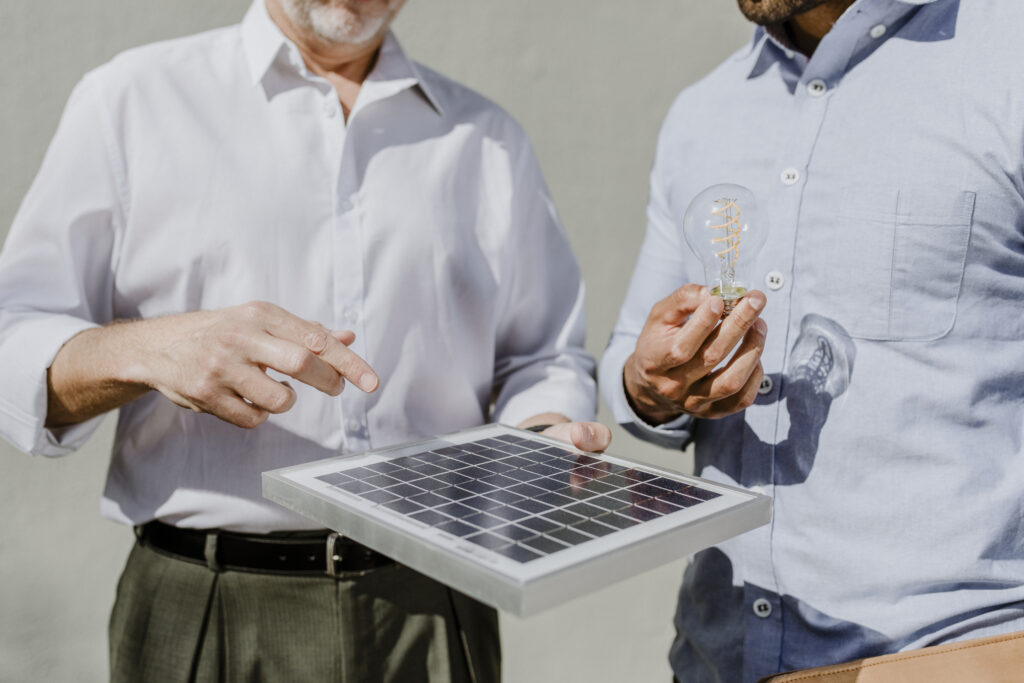
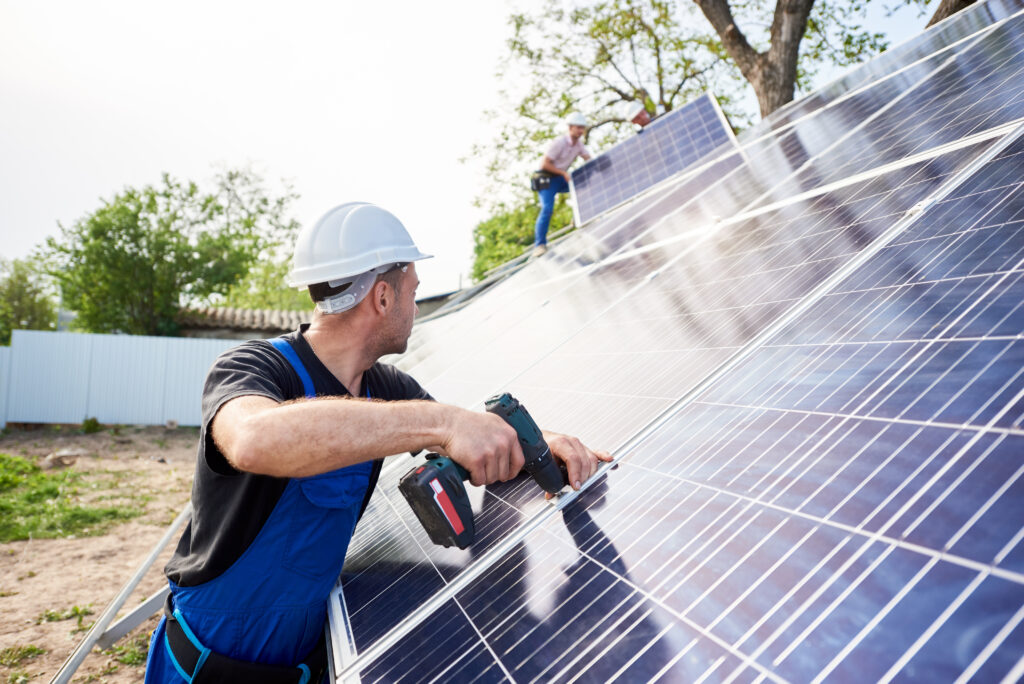
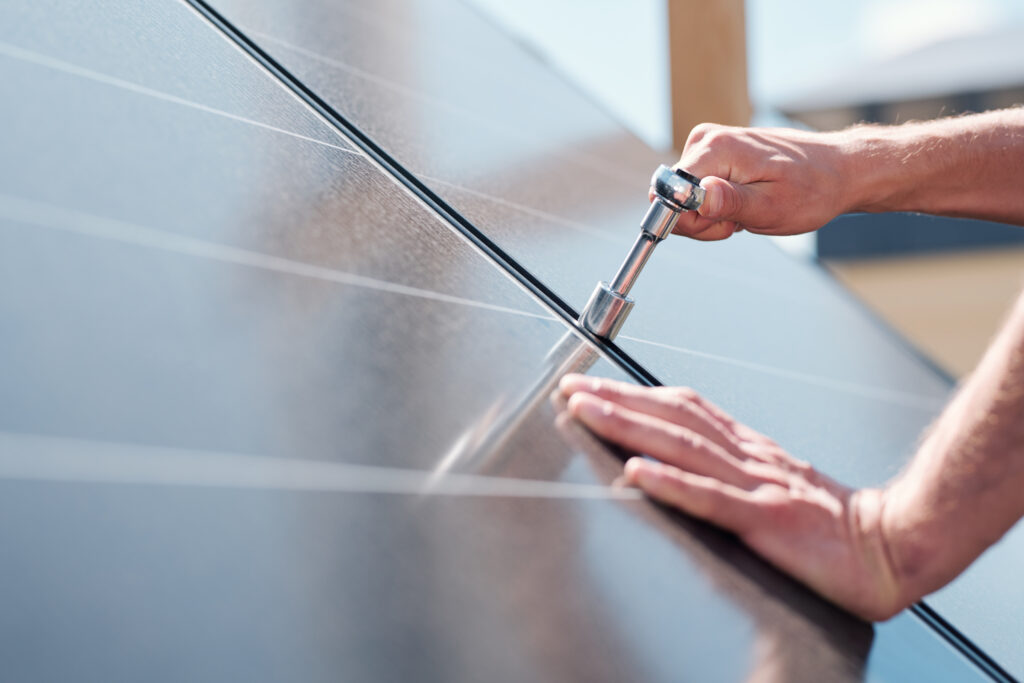
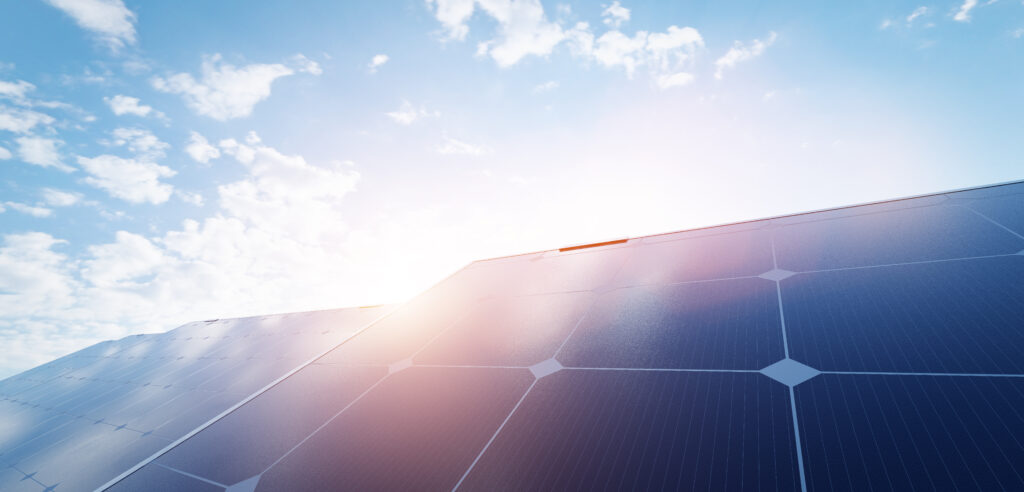
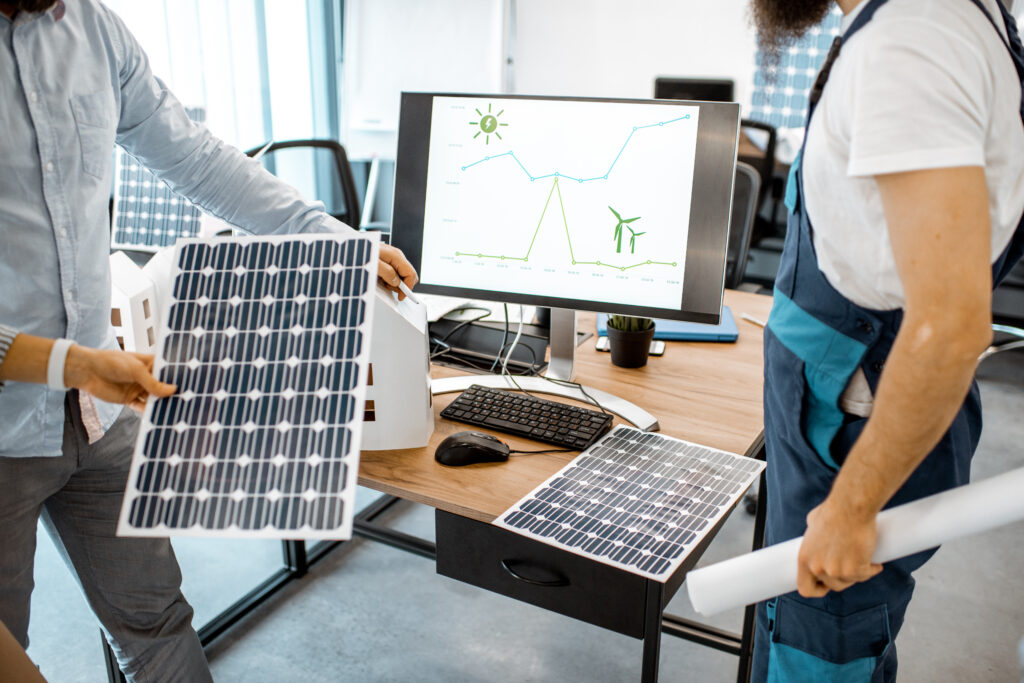
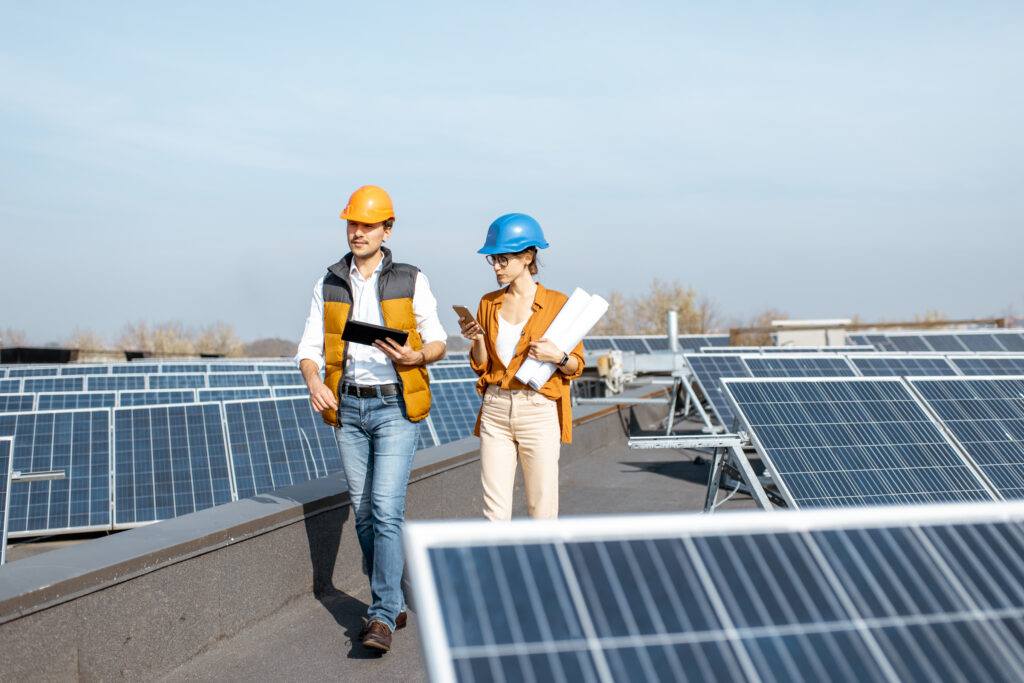
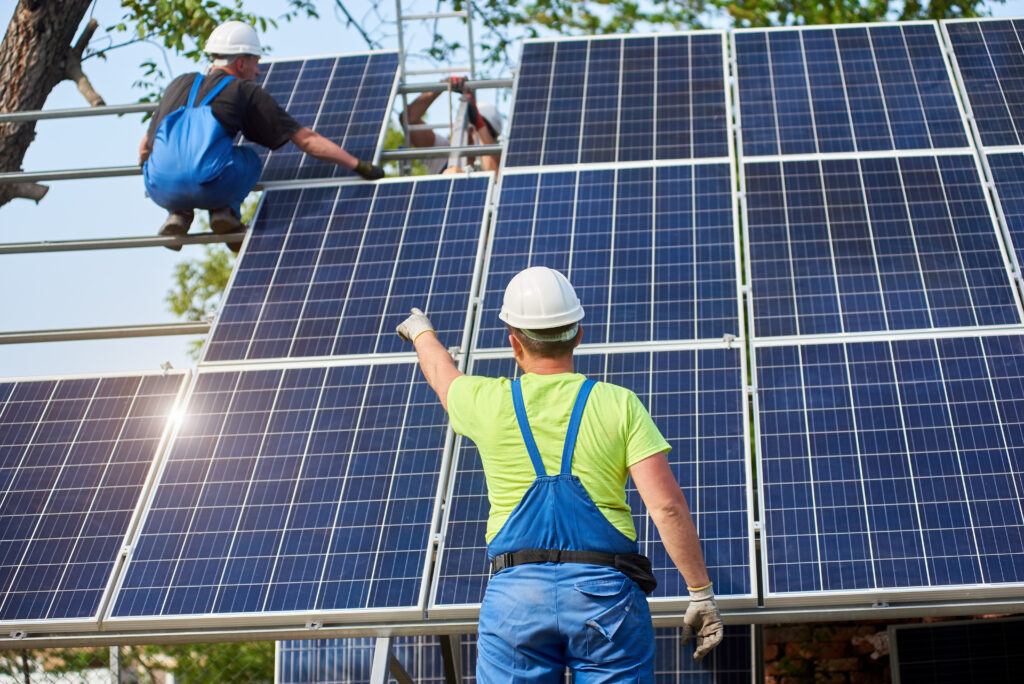
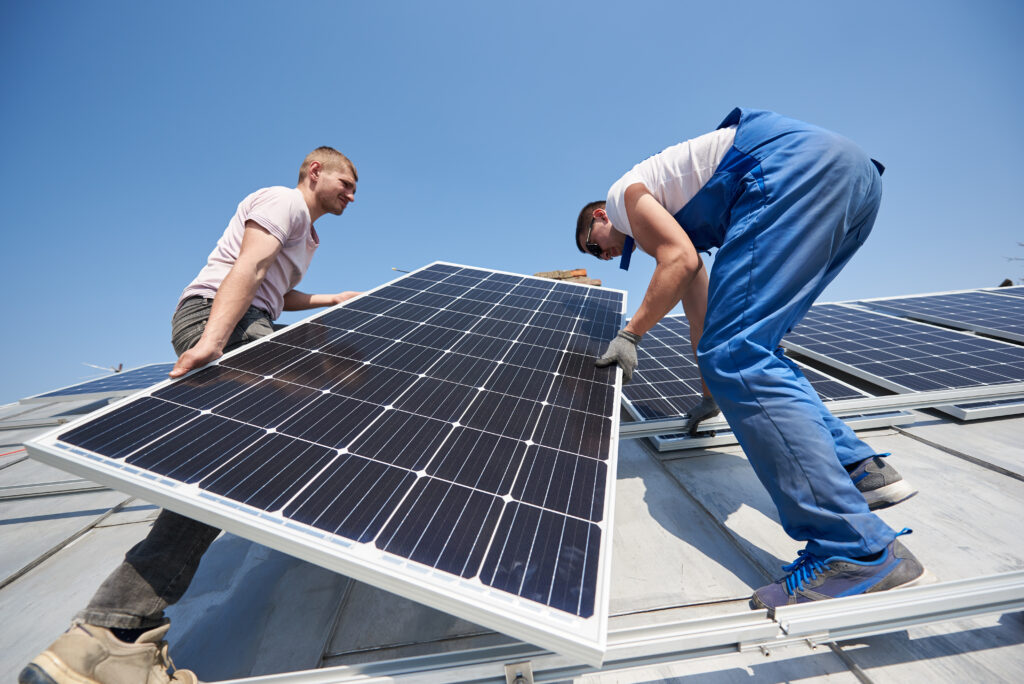
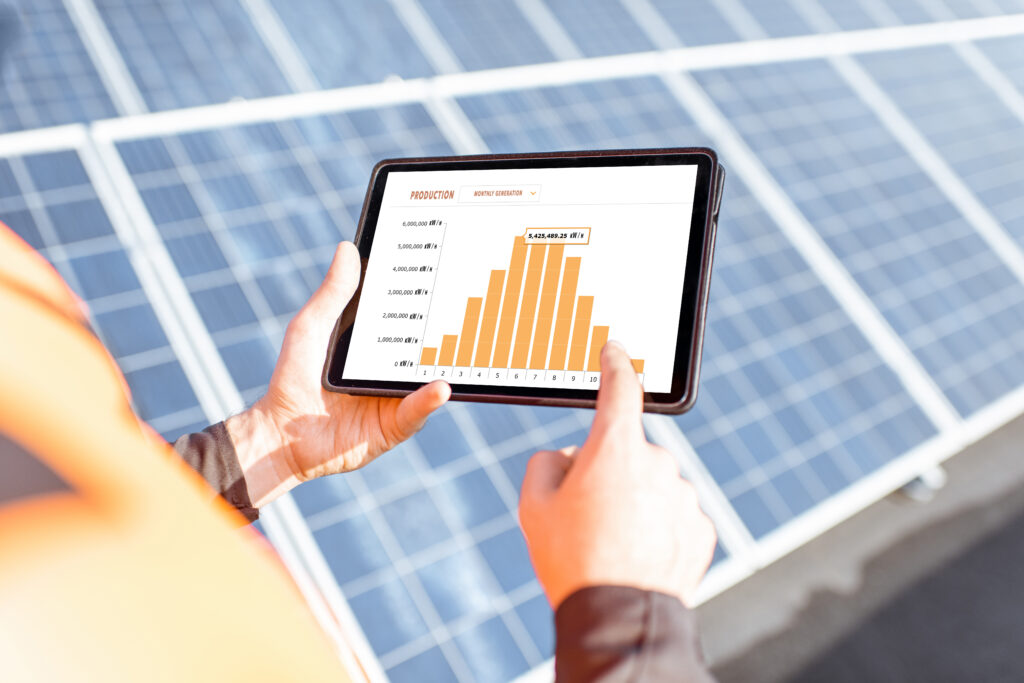
A professional planning process ensures that your system is technically optimised and that all legal changes (such as the feed-in rules applicable in Switzerland since 1 January 2026) are taken into account.
Here is the structured process in six phases:
1. Potential analysis & needs assessment
1. Analisi del potenziale e verifica delle esigenze
Load profile analysis: When do your machines or offices consume the most electricity? (Daytime vs. night-time operation).
Area check: Inspection of roof condition, statics and orientation (e.g. east-west for broader coverage of the working day).
Economic efficiency: Initial estimate of production costs (target value for 2026: approx. 7–10 Rp./kWh for commercial use).
2. Preliminary project & detailed planning
This is where the technical design is created.
Dimensioning: Design for maximum self-consumption (takes into account the 70% feed-in rule from 2026 onwards in order to save grid costs).
Component selection: Selection of modules, inverters and, if necessary, battery storage systems for peak shaving.
Offer comparison: Obtaining and reviewing offers from certified specialist partners.
3. Permits & grid connection
A decisive step in Switzerland with fixed deadlines.
Grid connection application (TAG): Early registration with the local energy supplier (EVU) to secure feed-in.
Reporting/building permit: In most cantons, a notification procedure is sufficient for solar installations on roofs (except in the case of listed buildings).
Funding request: Registration at Pronovo for the one-off payment (KLEIV or GREIV).
4. Installation & execution
Die physische Umsetzung an Ihrem Standort.
Editing: Installation of the substructure and modules (usually without interrupting operations).
Electrical installation: Connection of inverters and integration into the internal power grid.
Security check: Independent acceptance of the installation (SiNa – safety certificate).
5. Commissioning & integration 2026
Since this year, the focus has been on new digital options.
Smart Metering: Installation of mandatory smart meters to monitor energy flows.
Energy management (HEMS): Configuration of the control system to prioritise e.g. e-charging stations or heat pumps when there is excess solar energy.
LEG-Start: If planned, start of electricity supply to partners in the neighbourhood (local electricity community).
6. Monitoring & Maintenance
Securing long-term returns over 25+ years.
Real-time monitoring: Monitor performance via app or web dashboard.
Maintenance: Regular technical checks and cleaning of the modules as required.
The schedule at a glance
From the initial analysis to commissioning, you should allow for the following for a commercial project in Switzerland: 4 to 8 months calculate, whereby administrative processes (approvals) often take up most of the time.
In the current market environment (as of 2026), having their own solar power system is one of the most effective measures companies can take to reduce costs and minimise risk. The advantages can be divided into three key areas:
Economic efficiency: Self-generated solar power will cost you approximately the following over the lifetime of the system 7 to 10 pence per kWh. Compared to purchasing grid electricity (which often costs 25 pence or more), you save money with every kilowatt hour you consume yourself. This leads to a sustainable reduction in your operating costs and an attractive return on invested capital.
Planning reliability & independence: With a photovoltaic system, you can secure your energy costs for the next 25 to 30 years You become independent of unpredictable price fluctuations on the electricity market and can calculate stable energy costs in the long term – a decisive competitive advantage.
ESG compliance and image: Sustainability is a tough economic criterion these days. By producing clean electricity, you can measurably improve your carbon footprint. This not only helps you meet legal reporting requirements (ESG), but also strengthens your position with customers, investors and as an attractive employer.
Added value through innovation: Modern systems enable you to power your electric fleet cost-effectively and – thanks to new legislation coming into force in 2026 – participate in Lokalen Elektrizitätsgemeinschaften (LEG), um überschüssigen Strom profitabel an Nachbarn zu verkaufe
The optimal investment depends on your Load profile and your aiming:
For maximum savings: A system that is precisely tailored to your own consumption during operating hours (during the day). This guarantees the fastest return on investment.
Für maximale Rendite: Eine Vollbelegung der Dachflächen. Seit dem neuen Stromgesetz 2026 lohnt sich der Verkauf von Überschussstrom an Nachbarn (LEG) oder ins Netz dank garantierter Mindestvergütungen besonders.
For cost certainty: A combination with battery storage, to break expensive peak loads (peak shaving) and reduce grid costs.
Conclusion: The "right" system makes the best possible use of your roof to replace expensive grid electricity (approx. 30 Rp./kWh) with cheap self-generated electricity (approx. 8–12 Rp./kWh).
.
The investment costs depend primarily on the size of the system. Since fixed costs (such as scaffolding and planning) are less significant for large commercial roofs, the price per kilowatt peak (kWp) decreases as the area increases.
Guidelines for 2026 (gross investment before deductions):
Small businesses (approx. 10–30 kWp): CHF 1,800 to 2,400 per kWp.
Medium-sized businesses (approx. 30–100 kWp): CHF 1,400 to 1,800 per kWp.
Industry (from 100 kWp): CHF 1’100.– bis 1’400.– pro kWp.
Which subsidies and deductions reduce the price?
In Switzerland, you can significantly reduce the actual costs by three factors (often by 30% to 45%):
One-off payment (Pronovo): The federal government will pay you a one-off investment contribution. For commercial installations (GREIV), this often covers up to 30% of the investment costs..
Tax deduction: Investments in solar systems can be deducted from taxable income as property maintenance in almost all cantons.
Cantonal subsidies: Some cantons or municipalities offer additional subsidy programmes or bonuses (e.g. for facade installations).
What running costs should I expect?
Solar systems require very little maintenance. Calculate approximately 1% of the investment amount for:
Maintenance and technical inspections.
Insurance premiums (liability/property insurance).
Occasional cleaning (depending on location and roof pitch).
When will the system pay for itself?
Thanks to the minimum remuneration Thanks to feed-in tariffs and high electricity prices for grid purchases, commercial installations in Switzerland currently pay for themselves after 7 to 11 years old. With a service life of over 25 years, the system will then produce virtually free electricity for your business for at least 15 years.
Yes, absolutely. In Switzerland, the construction of photovoltaic systems is heavily subsidised by the federal government and often additionally by cantons or municipalities. The subsidy consists of three main pillars:
One-off payment (EIV): This is the most important subsidy provided by the federal government. You will receive a one-time investment grant, which is usually up to 30% of the investment costs covers.
For systems up to 100 kWp (KLEIV), you will receive fixed performance contributions (e.g. approx. 360 CHF per kWp for standard systems).
For large-scale installations above 100 kWp (GREIV), specific rates apply that significantly lower your investment hurdle.
Additional bonuses (new & increased in 2026): Special installations will be rewarded separately.
Angle of inclination bonus: Systems installed on façades or pitched roofs (over 75°) that generate a lot of electricity, especially in winter, receive a bonus of up to 400 CHF per kWp.
Parking bonus: If you install photovoltaic systems above your company car parks, additional subsidies have recently become available.
Tax benefits: For companies, the investment costs are considered a business-related expense in most cantons. fully deductible. This reduces your taxable profit and indirectly shortens the amortisation period by several years.
Important for planning for 2026: Since 1 January 2026, you have also benefited from a legally guaranteed minimum remuneration for the electricity you feed into the grid (at least 6 Rp./kWh for small systems).
Applications for federal funding are submitted centrally via the cantonal enforcement agency. Pronovo. We recommend submitting your application as early as possible in order to benefit from the current quotas.
We offer various maintenance contracts to ensure the functionality and longevity of your system. Our trained specialists will reliably take care of the maintenance of your solar power system.
In the event of a malfunction, our 24/7 emergency service is at your disposal. We will rectify the fault quickly and competently so that your system works smoothly again.
Solar power systems are extremely reliable due to the absence of moving parts low maintenance, but not completely maintenance-free. For optimal yield over 25+ years, we recommend:
Regular monitoring: We (or you) monitor the yields digitally via an app or dashboard. This means that any irregularities are noticed immediately, without anyone having to be on site.
Technical check (every 2–4 years): A specialist checks the inverters, cabling and protective devices to ensure operational safety and fire protection requirements are met at all times.
Professional cleaning: Depending on the location and roof pitch, dust, pollen or leaves may accumulate. Cleaning every few years ensures you up to 5–10% higher yield.
Safety certificate (SiNa): In Switzerland, it is a legal requirement to have the electrical system checked after major modifications or at regular intervals.
Conclusion: Maintenance costs are minimal. The costs for this are usually less than 1% of annual income – an investment that pays for itself many times over thanks to the long service life of the system.
Simply explained: There isn't one. In technical language, the terms are often used synonymously.
Photovoltaics (PV): This term describes the physical technology – i.e. the direct conversion of sunlight into electrical energy using solar cells.
Solar power system: This is the colloquial and functional name for the entire system that uses this technology to supply your business with electricity.
Important distinction: The only distinction to be made is between solar power (photovoltaics) and solar heat (solar thermal energy). While a photovoltaic system supplies electricity for your machines, computers and electric cars, a solar thermal system only generates hot water. Due to its high cost-effectiveness, photovoltaic systems are almost always the first choice for businesses today.
The legal framework for photovoltaics in Switzerland was established by the new Electricity Act (effective from 1 January 2026) and the revision of the Spatial Planning Act have been significantly simplified, but they also entail new technical obligations:
Notification procedure instead of authorisation procedure: In most cases (on flat or pitched roofs in construction, industrial and commercial zones), you will need no building permit. A simple notification to the local authority 30 days before construction begins is sufficient, provided that the system is considered "sufficiently adapted". Since 2026, this simplified procedure has often also applied to façade systems.
The new 70% feed-in regulation: Since 1 January 2026, new installations must be designed so that a maximum of 70% of the installed module capacity fed into the public grid. This serves to maintain grid stability. Your own consumption is not affected by this – you can use 100% of the energy internally. An intelligent energy management system (EMS) helps you to comply with this requirement without significant losses.
Connection & acceptance: Each system must be registered with the local distribution network operator (DNO). After installation, an official Safety certificate (SiNa): by an independent inspection body is mandatory in order to confirm safe operation in accordance with the Low Voltage Installation Regulation (LVIR).
Solar obligation for new buildings: Please note that in many cantons (e.g. Aargau, Zurich) a solar obligation For new buildings or large roof renovations above a certain area (approx. 300 m²).2exists.
Fire safety & occupational safety: The installation must comply with the guidelines of the Association of Cantonal Fire Insurers (VKF). In addition, strict safety precautions (e.g. fall protection in accordance with Suva) are required by law during installation.
We are happy to advise you and support you in complying with all relevant standards and regulations.
You can contact us in various ways:
We look forward to your enquiry!
On our website, you will find a wealth of information about solar power systems, e.g.:
We will also be happy to send you free information material.
We offer you numerous advantages, e.g:
Schmid Gebäudetechnik – Ihr kompetenter Partner für Lüftungsanlagen, Solarstromanlagen und Gebäudetechnik!
We would be happy to advise you personally and without obligation on our range of services. Give us a call or send us an e-mail

Monday 08:00 - 17.00
Tuesday 08:00 - 17.00
Wednesday 08:00 - 17.00
Thursday 08:00 - 17.00
Friday 08:00 - 17.00
Schmid Gebäudetechnik - Your partner for ventilation and building technology!
Our trained employees ensure the smooth operation of your systems
Your future at Gebäudetechnik Schmid. Are you looking not just for a job, but for a team you can rely on? Do you want to install technology that really inspires? Then you've come to the right place

AXPO and Schmid Gebäudetechnik: together for the future! We are pleased to present our latest joint project, in which the experience of AXPO and the innovative strength of Schmid Gebäudetechnik work hand in hand.

Gesundes Raumklima und effiziente Energienutzung Eine Lüftungsanlage sorgt für ein angenehmes und gesundes Raumklima in Ihrem Zuhause oder Büro. Sie filtert die Luft, entfernt Schadstoffe und Feuchtigkeit und sorgt für
WhatsApp Kontakt